India has always had a culture of conversation. The long chai sessions, the neighbour who listened without being asked, the auto-rickshaw driver who became a confidant. What is changing now is not the need — that has always been there — but the infrastructure. A new category of platform is emerging to meet it at scale.
The Problem These Platforms Solve
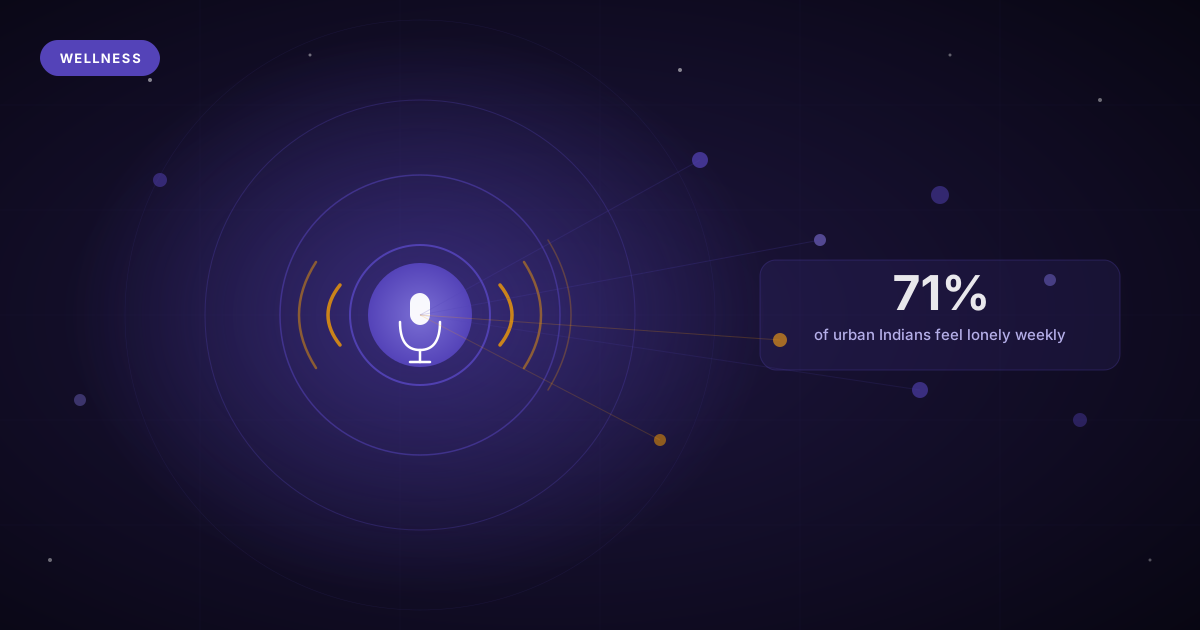
India's rapid urbanisation has fractured traditional support systems. Joint families have shrunk. Work-from-home culture has isolated millions. The people who used to listen — neighbours, extended family, coworkers over lunch — are no longer in daily reach.
At the same time, mental health awareness has grown significantly, particularly among Indians aged 18–35. People now recognise what they are feeling: anxiety, burnout, loneliness. But the formal support ecosystem cannot keep up. There are fewer than 0.3 psychiatrists per 100,000 people in India. Therapy costs ₹1,500–₹3,000 per session. The gap between awareness and access remains enormous.
What Audio Companion Platforms Are — and What They Are Not
Audio companion platforms occupy a specific and important space. They are not therapy. They do not diagnose, prescribe, or provide clinical treatment. But they offer something that clinical settings rarely can: a warm, unhurried, human conversation — available at any hour, in your language, affordable to access.
They are also not social media. There are no public posts, no follower counts, no algorithmic feeds. Every interaction is private, one-to-one, and real-time. The experience is closer to calling a trusted friend than to any existing digital category.
“Sometimes you do not need a diagnosis. You just need someone to say: I hear you.”
- Not therapy — but a meaningful daily layer of emotional support
- Not anonymous helplines — but consistent, growing connections with hosts you choose
- Not social media — but real-time, real-voice, real-person conversation
- Not AI chatbots — but verified humans with genuine empathy and care
The Host Economy: A New Kind of Work
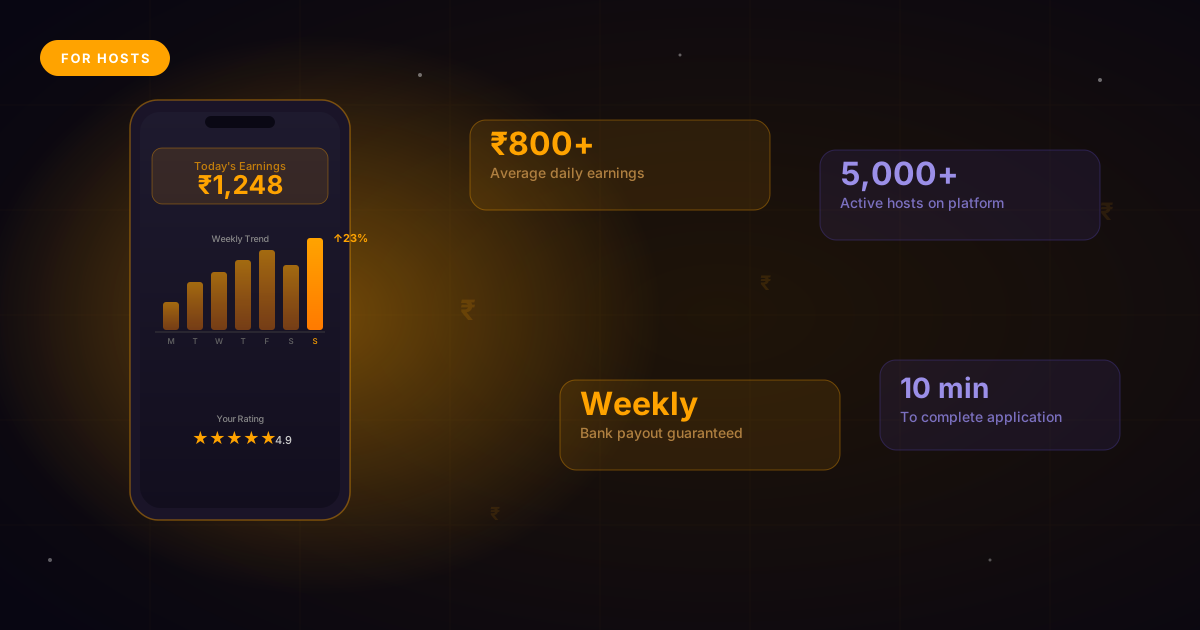
On the other side of every call is a host — a verified individual who chose this work because they are genuinely good at listening. Many are women in Tier 2 and Tier 3 cities earning a meaningful, flexible income from home on their own schedule. Others are students, working professionals who host part-time, or retirees who find deep purpose in the work.
This is not gig work in the traditional sense. It requires emotional intelligence, patience, and consistent care. Hosts who thrive on Suno Saathi are those who treat every call as significant — because for the person on the other end, it often is.
Market Size and Where India Is Headed
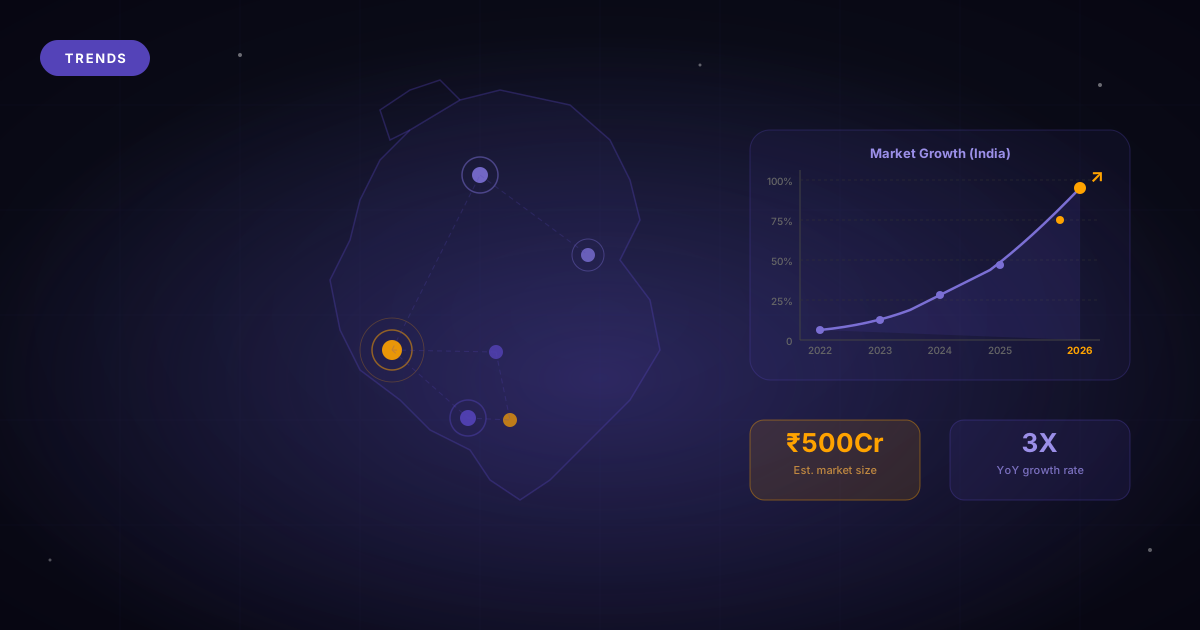
Industry estimates place India's audio companion and emotional support tech market at approximately ₹500 crore in 2026, growing at over 3x year-on-year. The drivers are clear: rising smartphone penetration, growing mental health awareness, affordable mobile data, and a generation that is more open to digital-first support than any before it.
Tier 2 and Tier 3 cities are emerging as significant demand centres — not just the metros. Users in Lucknow, Indore, Coimbatore, and Bhubaneswar are among the most active on Suno Saathi, driven by relative isolation from mental health services and strong appetite for regional-language support.
What Makes Suno Saathi Different
In a growing market, differentiation comes from trust and depth. Suno Saathi's approach centres on three pillars: verified hosts (every host undergoes identity verification before going live), language accessibility (Hindi, English, and regional languages supported), and a coin-based model that gives users full control — no subscription lock-in, no minimum commitment.
The platform is also building tools to support hosts: training resources, earnings dashboards, performance coaching, and community. The bet is simple: if you invest in the quality of hosts, the quality of conversations follows. And quality conversations are what drive everything else.
India has always known how to talk. What Suno Saathi is building is the infrastructure for those conversations to happen at scale — safely, accessibly, and in every language. The need has always been there. The platform to meet it is now.
Found this helpful?
Start a conversation on Suno Saathi today.