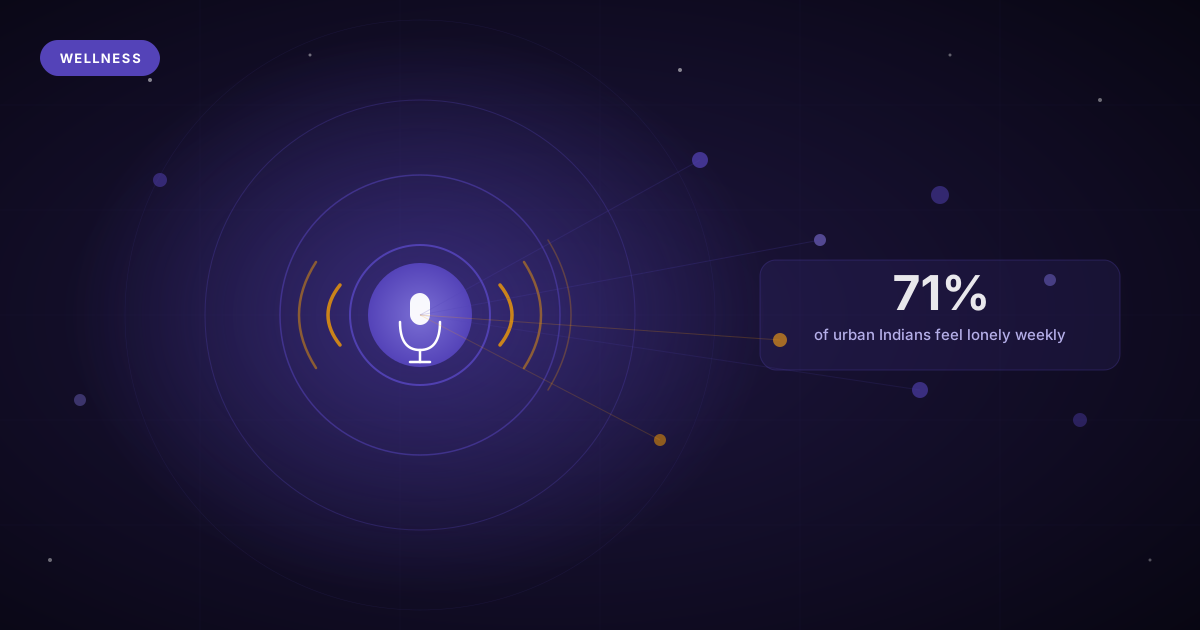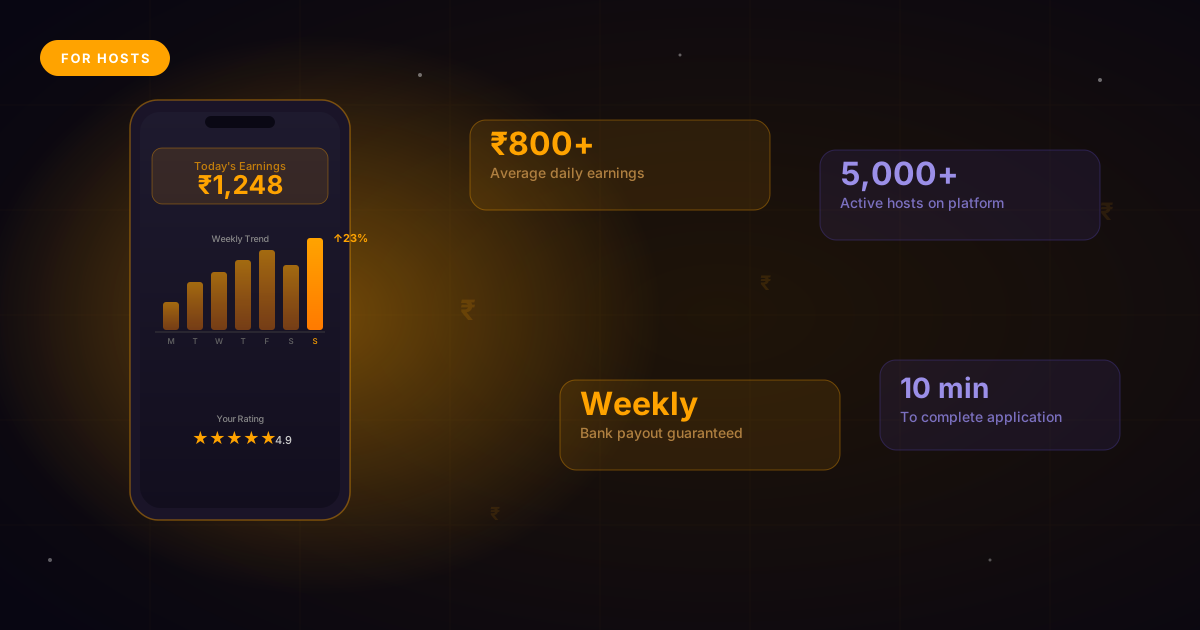
Think about the last time you felt truly heard — not just listened to, but understood. Someone reflected back exactly what you were feeling without adding advice, without steering the conversation toward themselves, without checking their phone. Something in you relaxed. The problem did not disappear, but it became lighter. That is not a coincidence. It is neuroscience.
The Difference Between Listening and Truly Hearing
Most people listen to respond, not to understand. While you are talking, they are forming their reply, waiting for the gap where they can insert their own story or advice. What feels like a conversation is often two people taking turns performing.
Genuine listening — where someone is fully present, asking questions that track your specific experience, and resisting the urge to fix or redirect — is genuinely rare. A 2024 University of Michigan study found that less than 12% of conversations involve what researchers categorised as active, reflective listening. Most people have never experienced it consistently.
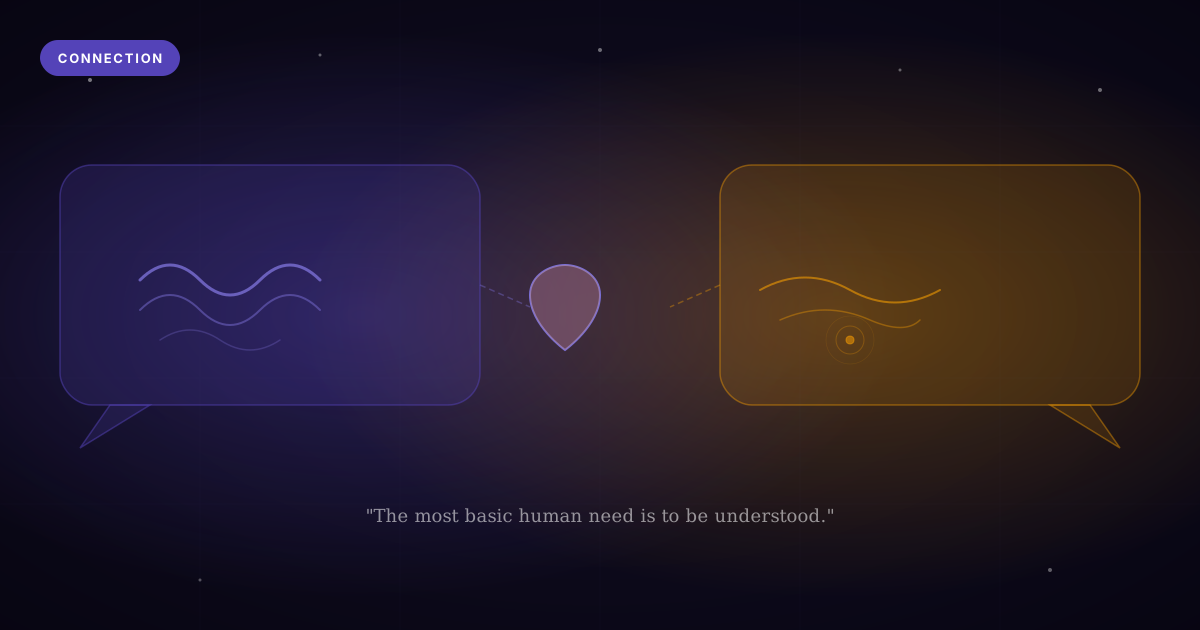
“The most basic of all human needs is the need to understand and to be understood.”
What Happens in Your Brain When Someone Really Listens
Neuroscientists call it neural coupling. When you share something meaningful with someone who is genuinely paying attention, your brain activity begins to synchronise with theirs. You are not just exchanging information — you are connecting at a neurological level.
This synchronisation is why being truly heard feels physically different from a surface conversation. Your heart rate slows. The amygdala — the brain's threat-detection centre — quiets down. Oxytocin, the bonding hormone, is released. Your body registers: I am safe. I am not alone.
- Active listening reduces the speaker's anxiety within 3–5 minutes
- Feeling understood improves problem-solving — we think more clearly after being heard
- Neural coupling during voice calls is significantly stronger than during text exchanges
- Regular meaningful conversations are linked to lower depression and anxiety rates
- Voice tone carries emotional data that no text or emoji can replicate
Why Strangers Can Sometimes Hear You Better Than Close Friends
One of psychology's most consistent findings is that people often open up more fully to strangers than to close friends or family. The reason is structural: with people who know us, there is history to protect, roles to maintain, and consequences to manage.
With a trusted stranger — a counsellor, a coach, or a Suno Saathi host — none of that exists. You can say the honest thing. The thing you have been circling around for months with the people in your life. And often, that honest thing is exactly what needed to be said out loud.
The Voice Advantage: Why a Call Beats a Chat Every Time
Text messages convey information. Voice conveys presence. When you hear another person breathing, pausing, adjusting their tone — your nervous system reads these signals in real time and responds. No written message, however thoughtful, can replicate that physiological effect.
Research consistently shows that voice calls resolve emotional distress faster than text exchanges. A 10-minute voice conversation with someone who is genuinely listening can improve mood, reduce perceived stress, and shift perspective in ways that an hour of texting cannot.
You do not have to be in crisis to deserve a conversation where someone fully listens. Sometimes you just need to say something out loud to someone who genuinely wants to hear it — without judgement, without advice, without distraction. That is enough. On Suno Saathi, that is exactly what you will find.
Found this helpful?
Start a conversation on Suno Saathi today.