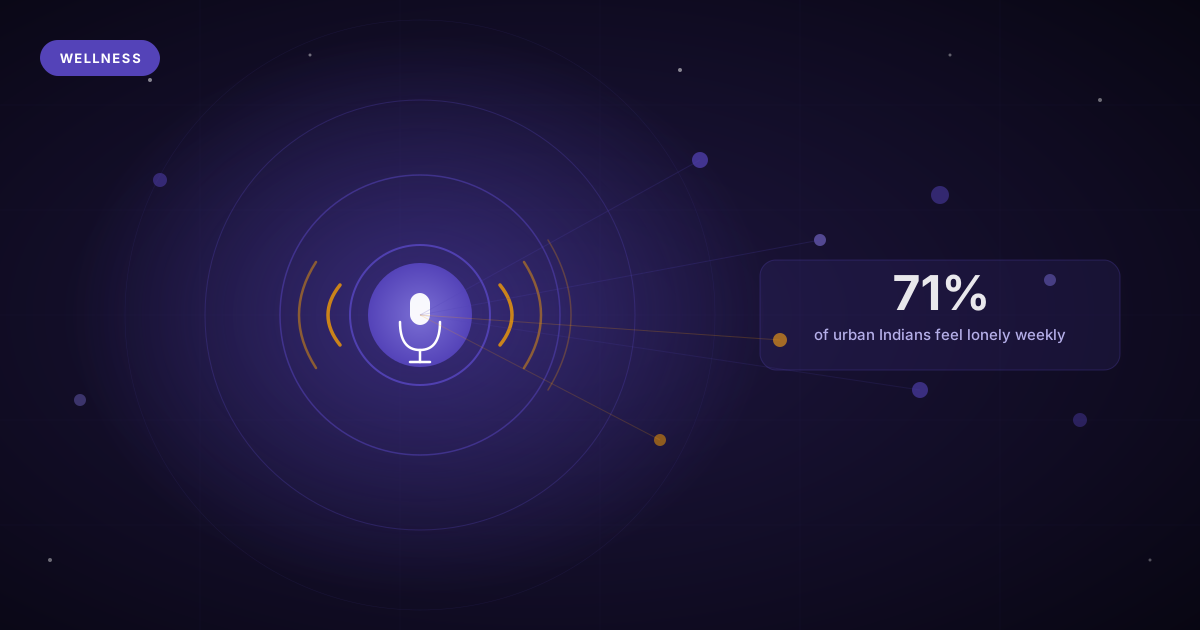
India has never been short of people. Crowded trains, bustling markets, families under one roof — togetherness seemed built into the culture. Yet something quietly shifted. A 2025 national survey found that 71% of urban Indians between 18 and 40 feel lonely at least a few times a week. They are surrounded by people and still going to bed feeling unheard.
Why Urban India Is Getting Lonelier
Rapid urbanisation pulled millions away from their support systems. Joint families became nuclear. Neighbours became strangers. Work moved remote and then hybrid, stripping away the informal conversations that used to fill a day. The people who would have listened — naturally, organically — are no longer down the hall.
At the same time, awareness of mental wellness grew dramatically among young adults. People now recognise the vocabulary: anxiety, burnout, loneliness. They are more willing to seek support. But traditional therapy in India remains expensive, stigmatised, and in many cities simply unavailable. The gap between need and access is enormous.
“Loneliness is not the absence of people. It is the absence of feeling known.”
Social Media Promised Connection. It Delivered Comparison.
A 2025 survey across six Indian metros found that those most active on social media reported the highest loneliness scores. Scrolling through curated highlights of other people's lives does not make us feel closer — it makes us feel further behind.
Texting is better, but still limited. It lacks the most powerful signal the human brain looks for: voice. Tone, warmth, laughter, hesitation — none of these survive compression into a chat bubble. The body reads text and registers information. It reads a voice and registers presence.
- Voice conversations release oxytocin — the bonding hormone — in a way text cannot
- Hearing someone laugh triggers mirroring in your own brain within milliseconds
- A 10-minute meaningful conversation can elevate mood for up to 3 hours
- Cortisol (the stress hormone) drops faster during voice calls than during text exchanges
What Audio Companionship Offers That Other Solutions Cannot
Audio companion platforms occupy a unique space between friendship and therapy. They are not clinical. They do not diagnose or prescribe. But they offer something clinical settings rarely provide: a genuinely warm, unhurried human conversation — available at 2 AM, in your language, at a price that does not require a credit check.
On Suno Saathi, every host is a real person who has chosen this work because they are good at listening. They are not bots, not scripted helplines. They are verified, trained in non-judgmental conversation, and available around the clock in Hindi, English, and regional languages.
How Suno Saathi Is Helping India Talk Again
Suno Saathi was built on a straightforward belief: every person deserves someone to talk to. Not as a crisis service, but as a daily act of care. Users connect with verified hosts for audio or video calls, paying with coins on a per-minute basis — no subscription, no commitment, no judgement.
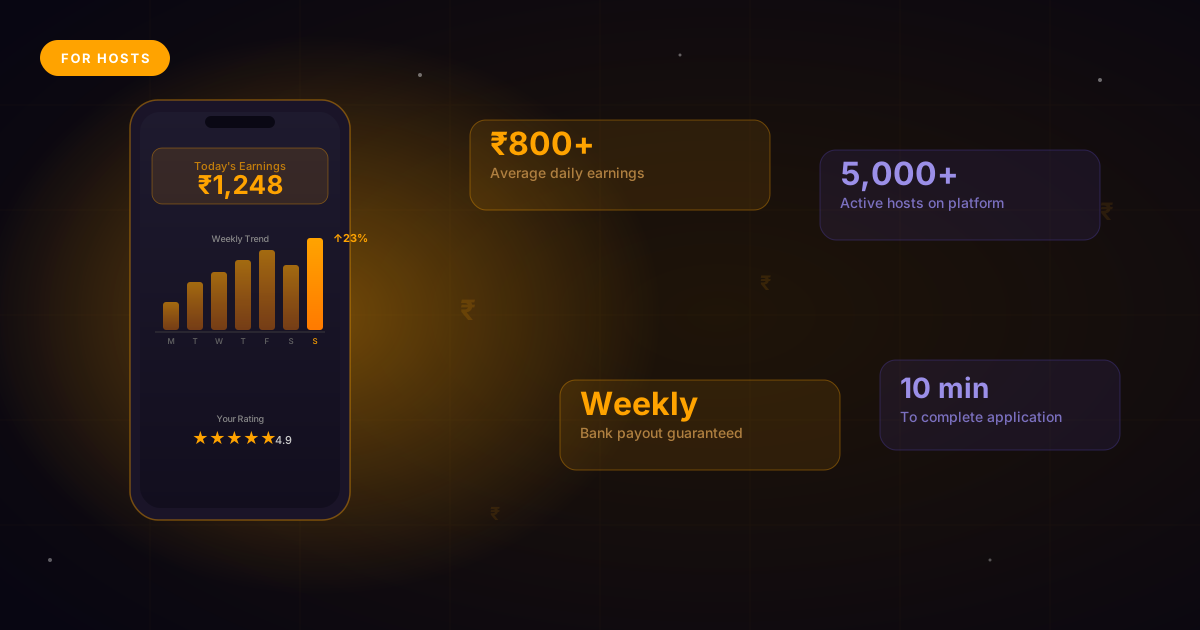
The results speak through the conversations. Users report lower anxiety, better sleep, and a renewed sense of being understood after regular use. The hosts — many of them women in Tier 2 and 3 cities earning a meaningful income from home — describe the work as genuinely fulfilling.
Loneliness is real, it is growing, and it is nothing to be ashamed of. The antidote is not more followers, more notifications, or a longer Instagram reel. It is a real voice, a willing ear, and the courage to say: I just need to talk. Suno Saathi exists for exactly that moment.
Found this helpful?
Start a conversation on Suno Saathi today.